Q4 Newsletter 2025

President’s Message
Each quarter when I sit to write the President’s Message for The Newsletter, I reflect on the quarter, the year, and even prior editions of The Newsletter President’s Messages. Today I peeked at the Q1 2025 President’s Message and the stark reversal from our current circumstances. “Reversal,” as in 180-degree turnaround from the environment in which we were operating last March.
At the end of Q1 2025, the industry was still reeling from the freeze over capital markets that dated back to early 2023. Raising money remained exceedingly difficult and most analysts referred to a “biotech winter.” The challenging funding environment for life sciences companies was compounded by unprecedented policy activity from the Trump Administration that created a pall over the innovation ecosystem at every stage of development, manufacturing, commercialization and patient access – e.g., threats to NIH funding, tariffs, most-favored-nation pricing schemes, threats to reauthorization of the SBIR/STTR programs, failed reauthorization of PPRV, threats to vaccines…and that’s just off the top of my head. In fact, it’s giving me a headache just thinking about it again and the degree to which we as a life sciences community were playing defense against new threats virtually every week. We were learning about the changing federal policy environment at the same time as our allies on Capitol Hill, with no advance warning.
At the state level, we were solidly playing offense. In February, Governor Shapiro introduced his proposed 2025-2026 Budget, complete with a $50 million Innovation Fund that dedicated $30 million to the life sciences. We launched a statewide campaign of events, meetings, letters, earned media and direct lobbying on behalf of the Innovation Fund, in the hope that we would have great news and an ecosystem development program to launch by late summer. Who knew the budget would not be signed until 134 days past its June 30 statutory deadline?
But this is not a recap of Q1 2025; it’s a reflection on Q4 and the topsy-turvy nature of public policy advocacy and trade association activity. At the federal level in Q4, after positive momentum in Q3 on R&D Amortization, reauthorization of SBIR/STTR, full funding for the NIH, and other key LSPA priorities (See Q3 Newsletter), we experienced a record-setting federal government shutdown of 43 days that halted all forward momentum. Between the time Congress reconvened November 12 and when they adjourned for the holidays December 19, there was little to no resumption of progress.
At the state level, all energy and enthusiasm for the Governor’s Innovation Fund was met by a resounding “thud” when Governor Shapiro and the General Assembly finally reached agreement on the Budget November 12 (not a typo, it was the same day the federal government shutdown ended!). The Innovation Fund was not included in the final 2026 Budget, nor any of its provisions. Worse still, the Budget decouples Pennsylvania’s tax code from the Internal Revenue Code under Section 174. This requires Pennsylvania companies to continue amortizing R&D expenses over multiple years, a devastating blow to small R&D-based companies and something Life Sciences PA fought successfully to reverse in Washington, DC earlier in the year in the One Big Beautiful Bill Act. Simply put: our innovation economy in Pennsylvania is now worse off than before the Budget was passed, despite the hype and enthusiasm that surrounded the Governor’s original budget proposal.
In the face of these challenges, there is a silver lining: over the past 12 months, Life Sciences PA has further strengthened an already powerful stable of allies and partners to address policy headwinds at both the federal and state levels. We are fortunate to have legislative champions in Harrisburg and Washington, DC, in both chambers of the PA General Assembly and the U.S. Congress, and on both sides of the aisle in both capitals. Moreover, we have added to our ally base across the private sector and enhanced our partnerships with business associations such as the Pennsylvania Chamber of Business & Industry and regional players in Pittsburgh, the Lehigh Valley and Philadelphia. It’s important to also note the industry still has a strong ally in the Governor’s office. Despite the Innovation Fund not surviving the 2025 process, the Shapiro Administration continues to support our efforts. They have been very active on the vaccines front, and in marketing the commonwealth’s life sciences ecosystem. These alliances will continue to prove crucial as we head into the second session of the General Assembly and Congress, and as both bodies and the Governor gear up for the 2026 election season…where we can expect the life sciences to be a popular topic for opportunistic politicians seeking election or reelection.
LSPA will continue to need your engagement and active support as we head into the new legislative year. Now, possibly more than ever, as many of our policy priorities hang in limbo, we ask that you consider attending Advocacy Day in Harrisburg to amplify our priorities at the state level. On the federal level, you will hear regularly from our Advocacy team on items such as reauthorization of the SBIR/STTR and PPRV programs – among undoubtedly others. We will continue our assertive push on these, but it’s important that elected officials and other policy makers also hear from you, the innovators and job creators. Watch for our Advocacy Action Alerts and make your voice heard.
Against this advocacy backdrop, it’s important to remember that Life Sciences PA is, at its core, a membership-based organization. Our membership continued to grow in Q4 in spite of – or perhaps because of – the storm in which our industry found itself. Please take a look at the list of new members, captured in these pages, and join us in welcoming them (24 new members in Q4 for a year-end total of 116 new members). With LSPA or any trade association, size does matter – for strength when advocating, and for an expansive network of connections.
Speaking of connections, our Program agenda also continued to succeed in Q4. Riding on the success and momentum of Life Sciences Future at the end of Q3, each one of our programs in Q4 exceeded its goal, with outstanding content, speakers and attendance. We continue to learn from these programs how to deliver the best, most timely and unique domain expertise that set LSPA programs apart from those of any other organization. You will continue to see how our programs are evolving as we head into 2026.
This quarter’s edition of The Newsletter offers a glimpse into the work being performed by your trade association in Advocacy and Membership growth. It also offers a forward look into the Signature programs and events we have planned for 2026. We hope you will join us throughout the year at these gatherings as, together, we enhance the ecosystem that is Life Sciences PA.
On behalf of a grateful team at Life Sciences PA, I wish you all the best for a safe, healthy and prosperous New Year,
All the best,

Christopher Molineaux
President & CEO
Life Sciences Pennsylvania




2025 Patient Summit
Life Sciences Pennsylvania was honored to convene patient advocacy groups, legislators, and member organizations for its annual Patient Summit. This half-day summit, where attendees had the opportunity to learn about exciting developments in the life sciences ecosystem, was hosted at Faegre Drinker in Philadelphia.
Topics for the Summit were derived from feedback provided by LSPA Patient Advocacy Groups and included discussions on Vaccination Access in PA; Brain Health Research Partners Across the Commonwealth: The ALS Story Patient Perspective; the State and Future of HIV/AIDS R&D; and The Promise of Cell Therapy in PA. The LSPA Patient Summit reflects on the importance of interactions between patients, policymakers and those researching and developing medicines and technologies.
Nowhere was that more evident than in the heartfelt introduction provided by State Representative Kyle Mullins (D, HD-112) to the conversation on research partnerships benefiting ALS research. On stage, Represenative Mullins was joined by ALS patient advocate, Stephen Cronin, Dr. Daniela Zarnescu of Penn State Health, Dr. Piera Pasinelli of Jefferson Health, and Tony Heyl of ALS United Mid-Atlantic. Representative Mullins, who has a personal connection to this awful disease, was able to announce his $5 million for a neurodegenerative disease research program that he and Representative Bryan Cutler (R, HD-100) secured in the 2025-26 budget passed the day before this event.
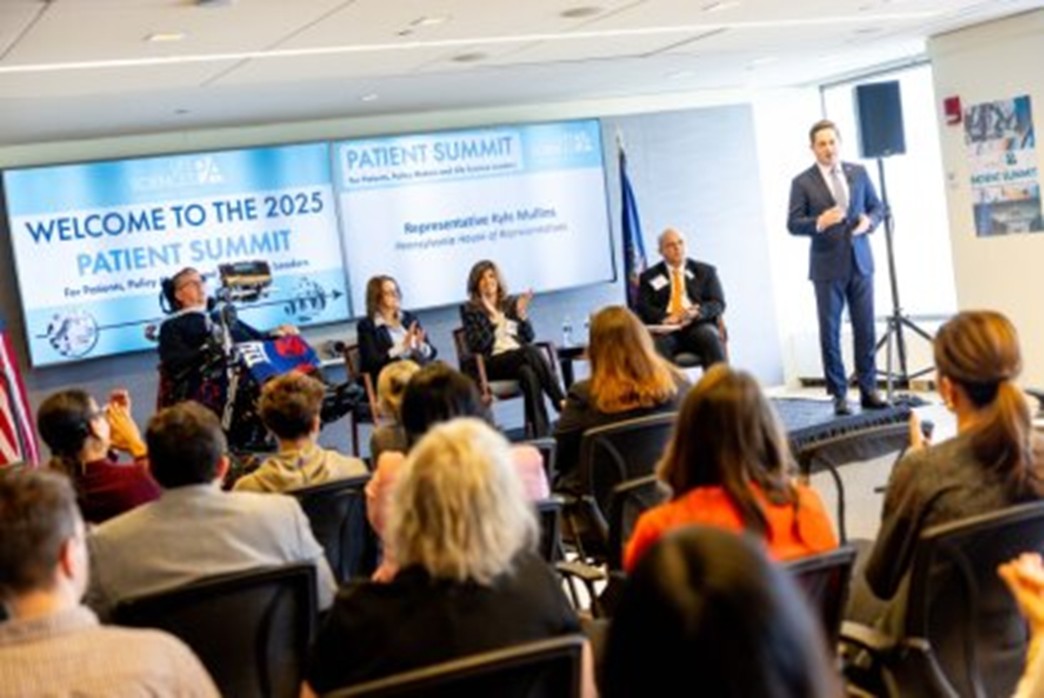
Philadelphia, PA – Rep. Mullins introduces panel on “Brain Health Research Partners Across the Commonwealth: The ALS Story Patient Perspective”
Advocacy

If you would like to get involved in our federal advocacy or have any questions, please contact Lara Flynn (lflynn@lifesciencespa.org) Sr. Director, Federal Policy & Public Affairs.
Government Shutdown/Reopening
As the fourth quarter of 2025 opened, we officially entered a 43-day government shutdown, the longest government shutdown in U.S. history. The legislation signed November 12, 2025 (H.R. 5371) that reopened the federal government included a Continuing Resolution (C.R.) through January 30, 2026. The Agriculture, Rural Development, Food and Drug Administration, and Related Agencies appropriations bill funds the FDA through September 30, 2026 and ensures uninterrupted operations for drug, biologic, and medical device reviews and regulatory submissions. A summary of that legislation can be found here.
MedTech Conference
Life Sciences PA joined State Medtech Alliance (SMTA) – a consortium of state and regional trade associations – colleagues for the annual AdvaMed MedTech conference in San Diego. LSPA was proud to support device and diagnostic member organizations as they shared inspirational patient stories and participated in panel discussions and presentations throughout the conference. Those members highlighted Pennsylvania’s prominence in researching, developing, and manufacturing medical technologies to an international audience, and we appreciate our continued partnership with national association partners, like AdvaMed, to bolster the country and the state’s medical device and diagnostics community.
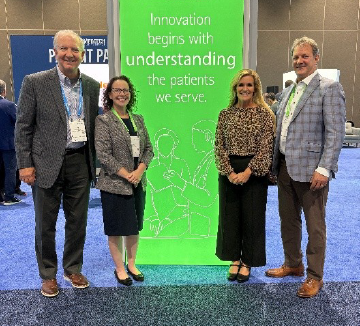
San Diego, CA – From Left: Pat Whitmer, LSPA Board of Directors and B. Braun, Corporate Vice President, Corporate Affairs and Communications; Lara Flynn, LSPA; Stephanie Pitts (B. Braun, Vice President, Strategic Programs & Innovation); Rob Albert (CEO of B. Braun of America)
End of Year Policy Updates:
SBIR Reauthorization
Over the course of 2025, Life Sciences PA has executed a grassroots campaign with letters sent to the entire PA Congressional delegation encouraging co-sponsorship of the reauthorization legislation, the INNOVATE Act. We are fortunate to have bipartisan and bicameral support from the Pennsylvania delegation for its passage. Funding for the Small Business Innovation Research (SBIR) and Small Business Technology Transfer (STTR) programs is an essential source of early-stage capital that helps life sciences startups translate research into novel medicines and technologies. Last year Pennsylvania companies received 226 awards totaling almost $134 million.
The INNOVATE Act H.R. 5100, passed the House of Representatives in September of 2025, however, it remains stalled in the US Senate. Life Sciences PA continues to work with its national and state partners, who meet regularly with Small Business and Entrepreneurship Senate Committee staff to encourage passage in the Senate. Until the program is legislatively reauthorized, current NIH guidance to SBIR recipients can be found here: “Notice of Early Expiration of NIH Small Business Innovation Research (SBIR) and Small Business Technology Transfer (STTR) Notices of Funding Opportunity and Guidance for Existing Recipients.”
NDAA/BIOSECURE
December 17, Congress passed the $900 billion National Defense Authorization Act (NDAA) in a bipartisan fashion and it has been signed into law. The NDAA includes the BIOSECURE Act that will impose new restrictions on federal agencies and on entities receiving federal contracts, grants, or loans, prohibiting the use of biotechnology equipment or services from designated “biotechnology companies of concern.” This includes entities identified by the Department of Defense as Chinese military companies and designated through an additional national security process through the Office of Management and Budget. That annually updated list, referred to as the “1260 List” is available here. Life Sciences PA has worked closely with our national trade association partners to educate legislators on the unique and complex international supply chains and collaborations our member organizations rely on. The law establishes a phased, multi-year implementation timeline as well as a five-year grandfathering and wind-down period for existing contracts and funding arrangements.
Pediatric Priority Review (PPRV)
U.S. Senate Health, Education, Labor and Pensions (HELP) Committee Chair Dr. Bill Cassidy (R-LA) – through a procedural move – attempted to advance the Mikaela Naylon Give Kids a Chance Act Wednesday, December 17. This is a bipartisan bill that includes the reauthorization of the Rare Pediatric Disease Priority Review Voucher. It passed the U.S. House December 1. While strong support was voiced on the Senate floor, a procedural objection from Senator Bernie Sanders (D-VT) prevented the bill from moving forward by the end of 2025.
The Rare Pediatric Disease Priority Review Voucher Program (PPRV) incentivizes the development of novel therapies to treat rare pediatric diseases. This program was not reauthorized by the end of 2024 and has therefore expired. Reauthorization of this vital program would be extended to September 30, 2029. The Trump administration is supportive of this bill and has encouraged swift passage. Life Sciences PA will remain engaged with the Pennsylvania delegation and U.S. Senators McCormick and Fetterman on this issue important to members researching and developing rare pediatric therapies and will continue to seek avenues to reauthorize this important program.
Lower Healthcare Premiums for All Americans Act
Life Sciences PA was pleased to see the U.S. House pass H.R. 6703, the Lower Health Care Premiums for All Americans Act. This bill was passed December 17 by a party-line vote and includes provisions Life Sciences PA supports.
This legislation advances two LSPA priorities, though its path in the U.S. Senate remains unclear. First, this bill requires pharmacy benefit managers (PBMs) to be more transparent with employers and employees including detailed reporting on prescription drug spending, such as rebates, pricing, and formulary decisions. Second, this legislation expands access to Association Health Plans by allowing employers, including self-employed individuals, to join across industries to purchase coverage. It restores and codifies a 2018 executive order by President Trump on Association Health Plans and strengthens bargaining power for small business owners and independent workers.
More information on this legislation is available here. Life Sciences PA has long advocated Pennsylvania to allow for the utilization of Association Health Plans and will continue that effort in Harrisburg now bolstered by progress on this issue at the federal level.

Advertisement

If you would like to get involved in our state advocacy or need more information on contacting your legislator, please contact Kurt Imhof, Senior Vice President for Policy and Public Affairs at kimhof@lifesciencespa.org.
Pennsylvania Budget Passed
On November 12, 2025, the Pennsylvania House and Senate passed and Governor Shapiro signed the General Appropriations Act (SB 160), Fiscal Code (HB 416), School Code (SB 315), and Human Services Code (HB 749). These bills comprise the commonwealth’s budget for fiscal year 2025-2026.
The final overarching agreement included approximately $50.09 billion in General Fund expenditures. This represents an increase of approximately $2.27 billion, or 4.8 percent, over last year’s General Fund expenditure of $47.82 billion. Of the $2.7 billion in new spending, approximately $2 billion will be used to backfill increased Medicaid spending.
Life Sciences PA knew this was going to be a difficult budget year in Pennsylvania, given fiscal and political dynamics, but we were buoyed by the Governor’s inclusion of a $50 million Innovation Fund as part of his February budget proposal. This was the first new, significant life sciences funding proposed by state government in many years, and Life Sciences PA was proud to advocate for this funding. In fact, LSPA highlighted it in more than 60 meetings held during our annual Advocacy Day; 89 letters sent to state legislators; through a letter to House and Senate Leadership signed by 43 life sciences executives; in additional meetings with legislators and their staff; and throughout dozens of public events and media availability throughout the first ten months of the year.
Unfortunately, that funding was not included in the final budget agreement that was reached. Unexpectedly, the budget included a provision to decouple Pennsylvania’s tax code from the Internal Revenue Code under Section 174. This requires Pennsylvania companies to continue amortizing R&D expenses over multiple years – something Life Sciences PA fought successfully to reverse in Washington, DC with many state and national partners.
This policy, added to the budget agreement at the 11th hour and vehemently opposed by Life Science Pennsylvania and most state business organizations, is sure to reduce economic growth and penalize investments by companies in R&D-intensive industries – such as manufacturing, technology, and life sciences – and have a disproportionate impact on small, innovative companies significantly affected by changes to cash flow.
Life Sciences Pennsylvania does appreciate state government’s investment in a Neurodegenerative Disease Research program at $5 million, reauthorizing Pennsylvania’s Rare Disease Advisory Council (PARDAC), and continued investment in the funding of existing programs, as follows:
- The Research & Development Tax Credit is funded at its current level of $60 million;
- The Ben Franklin Technology Partners maintain total funding of $17 million;
- The budget continues to provide $3 million to the three ($1 million each) Life Sciences Greenhouses to fund early-stage, innovative life sciences companies;
- Consistent with past years, the budget provides for up to $15,000,000 in Keystone Innovation Zone (KIZ) tax credits worth up to $100,000 for qualified firms;
- The biotechnology research line item increased to at $11.35 million;
- 6 percent of the state’s annual tobacco settlement payments are directed to the Commonwealth Universal Research Enhancement (CURE) Program in the Department of Health to fund research projects conducted by Pennsylvania-based researchers, universities, medical schools and other institutions. This year’s budget continues allocations from the CURE dollars specifically for spinal injury research, pediatric cancer research and equipment grants for biotechnology research.
Though this budget does not include crucial items for which we and our allies vigorously advocated, it is important to acknowledge the work of the Life Sciences Caucus and its Co-Chairs in the General Assembly, who work tirelessly on many issues affecting the industry and work to protect incentives for the life sciences community.
Additionally, we thank the Life Sciences PA State Policy Committee for its engagement on these issues and their continued support of our legislative agenda.
Rare Skeletal Conditions Briefing in Harrisburg
Life Sciences PA joined the Skeletal Conditions Advocacy Coalition alongside partners at BioMarin Pharmaceutical Inc. and RASopathies Network USA for a legislative briefing in Harrisburg highlighting Pennsylvania patients and families affected by rare skeletal conditions – and the critical programs in Pennsylvania that they rely on.
Attendees heard from the PA Secretary of Health Dr. Debra Bogen, Pennsylvania House Rare Disease Caucus Co-Chair, Representative Nate Davidson (D, HD-103) and Pennsylvania Senate Life Sciences Caucus Co-Chair, Senator Frank Farry (R, SD-06) on their commitment to rare disease patients. RASopathies Network USA President Beth Stronach shared her experience as a mother and caregiver for her son, and Dr. Ricki Carroll of Nemours Children’s Health System discussed the impact of the life saving treatment and the need for early intervention.
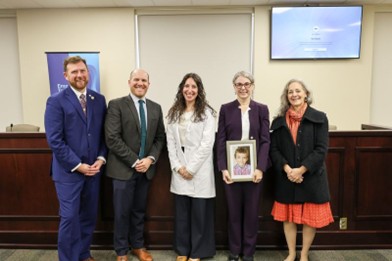
Harrisburg, PA – From left: Rep. Davidson, Kurt Imhof, Dr. Carroll, Beth Stronach, and Sec. Bogen
Tour for Consular Corps Association in Southeastern PA
Life Sciences Pennsylvania was honored to partner with the Consular Corps Association of Philadelphia and other regional partners and member organizations to host 14 diplomatic leaders from foreign embassies and consular offices. This “familiarity tour” highlighted the innovation and partnerships that drive Pennsylvania’s life sciences ecosystem. Life Sciences PA looks forward to continued work with our partners, the foreign officials present, and the companies and organizations they represent to generate greater interest and investment in the Commonwealth.

Spring House, PA – Christopher Molineaux provides PA life sciences overview to consular officials
Newborn Immunization Schedule
The Advisory Committee on Immunization Practices (ACIP) voted December 5 on a new recommendation on the hepatitis B vaccination for newborns. The vote, which was decided by an 8-3 margin, lifted the recommendation that all newborns receive hepatitis B vaccinations at birth. Specifically, the panel recommends that if an infant’s mother tests negative for hepatitis B, parents should consult a physician and decide for themselves whether the baby needs an early vaccine dose. If an infant does not receive the birth dose, the panel suggests the infant should not receive it until at least two months old.
While the recommendation does recognize the importance of conversations between parents and providers, this decision disregards decades of safety and effectiveness data that strongly support the hepatitis B birth dose. There is no evidence that delaying it provides any benefit and in fact, the universal hepatitis B birth dose has contributed to a 99% decline in reported acute hepatitis B cases among children, adolescents and young adults in the U.S.
Life Sciences PA appreciates the ongoing efforts of Governor Shapiro’s administration to provide its support for the vaccine and to protect access to evidence-based, safe vaccinations – many of which are researched, developed and manufactured in Pennsylvania.

Advertisement
BEING A LIFE SCIENCES LEADER PODCAST
With a bird’s-eye-view of the life sciences industry, Life Sciences Pennsylvania President & CEO, Chris Molineaux, joins Rachael Bushey, Partner and Co-managing Partner of the Philadelphia office of Goodwin Procter to welcome life sciences leaders to give insights into the complex and high-risk world of pharmaceuticals, biotechnology, medical devices, diagnostics and the services that support them. Here we learn what it means to be a life sciences leader.


Welcome 2025 New Members!
Advanced Optronics Inc
Afton Consulting Group
AltruMed
Alvernia University
Aneurisk Inc.
Ardelyx
Atomic Medical Innovations
Avalo Therapeutics, Inc.
Avilez Rocha Consulting LLC
Avstera Therapeutics Corp
Baxter Healthcare Corporation
Benchmark Products
BioAgilytix Labs, LLC
Biocytogen
BioIVT
Biotech Law Center
CannonDesign
CGI
Chemia Biosciences Inc.
ChyloMetis, Inc.
CorriXR Therapeutics, Inc.
CRIO
Culture Biosciences
DermAb.io
Duo Oncology
Earable Intelligence
Echogenesis Therapeutics Inc.
Eigen X
ElevateBio
Every Cure
ExoBioMed LLC
FluidiSpec
Forma Medical
Franklin Biolabs Inc.
Global Strategic Advisory LLC
Glycotest, Inc.
Hayflick Partners LLC
HeadStrait Labs, Inc.
HEARTio
HIRE-IQ
Hot Metal Labs
Howson & Howson LLP
Immudex
InnSight Technology
Inspired Material Strategies, LLC
IT Services Group, LLC
Jeffrey Warden Design
John Sisk & Sons
JRF America
Jurata Thin Film, Inc.
Keele Advisory
Korion Health
Ladder Bio, Inc.
L.E.K. Consulting
Leech Tishman
Legend Biotech
Lyophilization Technology, Inc.
Made Scientific
Magnify Biosciences Inc.
McKinsey & Company, Inc.
Mechano Therapeutics LLC
Medicilon USA, Corp
MEDPIPE Maintenance Corporation
MedTech Dynamics, LLC
Meeregal Global LLC
Menarini Silicon Biosystems, Inc.
Merlin Biotech
MilliporeSigma
Mintellium Therapeutics
MLP Ventures
MoleculeDx Inc
MYCO Mechanical Inc.
Neovate Capital Partners
Netramind Innovations
Nobias Therapeutics
Nous Biosciences, Inc.
NürnbergMesse Brasil – FEIRAS E CONGRESSOS LTDA.
Oakland Bio
Ok2StandUp Inc.
Oliver Design
Ophidion Inc.
Panther Life Sciences
Peroxitech
Precision Neuroscopics Inc.
Premier Pharma Executive Talent Sourcing LLC
R3A Architecture
Ramius Services LLC
RheumaGen
RhyGaze Inc.
RX2 Solutions
SciSure, LLC
SciY
SCSI Partners LLC
SeatonHill Partners
SERB Pharmaceuticals
Smerd Group
Snail Biosciences, Inc.
SOKOL GxP Services
Solaris Endovascular, Inc.
Sonura Care Inc.
STEMup Science and Technology Institute
Thaumazo Bioscience Management, Inc.
The Noramco Group
The Therapeutic Innovations Group
Tiger BioSciences
ToxiSense
TriNet
Turnberry Solutions
University Place Associates
US Lab Partners
Vellum Biosciences, LLC
VeyTel Inc
Viatris
Vibrant Biomedicines, Inc.
Wells Fargo Bank
Zegenex
Thank you to our 2025 newsletter sponsors!















Get Updates
from LSPA
Stay up-to-date on the latest news and events from Life Sciences PA, insights from the life sciences industry, and so much more!

Life Sciences Pennsylvania was founded in 1989 by a biotech scientist at Penn State University. Today it has grown to represent the entire life sciences industry – biotechnology and diagnostic companies, medical device companies, pharmaceutical companies, investment organizations, research institutions, and myriad service industries that support the life sciences in Pennsylvania.